
How to Increase Attic Insulation-Efficiency
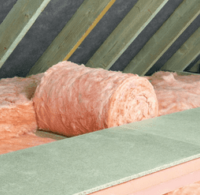
 Do you have high home heating and/or cooling cost? Is your attic properly insulated? If you’d like your home to be more energy- and cost-efficient, consider a better attic insulation; it will make your home cooler in the hot summer days and warmer in the cold winter months.
According to statistics, almost 90% of a house’s heat loss happens through the attic space. If your home’s built before the early ’70s, it probably wastes energy and your money too.
R-value of a material shows how much of an insulation it provides; the higher the number, the better insulation. For buildings built before the early ’70s, the average R-value was 11 or even less, whereas contemporary standards insist on 38 or higher, based on the location of the buildings. Between the ceiling joists of some buildings, there’s gray material. In older houses it’s probably mineral wool, while new houses usually have blown-in cellulose. Anyway, it’s an insulation material you can leave in place before adding insulation over it.
Whenever you work with insulation, it’s crucial to wear particle mask, eye protection and gloves, in particular if you use fiberglass. Although it’s easier to work with rigid foam, when insulating the attic, it’s more convenient to get fiberglass up into it. In case the fiberglass insulation seems to be too thin at the center of the home, don’t worry; it’s going to expand. When cutting a batt to size, laying it on a piece of plywood is recommended. It’s easier to cut the fiberglass when it’s compressed, so putting your foot on it and leaning on it to compress the material might be a good idea.
In case your attic is already insulated with six inches of material, yet you want to upgrade it to the recommended R value (of 38 or more), you should consider adding an “attic blanket”: although it doesn’t have paper backing, it’s made of fiberglass as well. To install attic blanket, you only need to lay it across the joists. Once you get to the desired R-value, you can stop adding layers.
If you’re willing to pay a few bucks more for the insulation that’s safer and easier to work with, opt for the newer types of no-itch poly-wrap insulation.